סלם = סיני
In parshas Ki Seitzei, among the laws Moshe teaches the people, the Torah commands, “כִּ֤י תִבְנֶה֙ בַּ֣יִת חָדָ֔שׁ וְעָשִׂ֥יתָ מַעֲקֶ֖ה לְגַגֶּ֑ךָ, when you build a new house, make a railing for your roof,” so that you do not bring blood upon your house “כִּֽי־יִפֹּ֥ל הַנֹּפֵ֖ל מִמֶּֽנּוּ, if anyone falls from it.” Chazal expounded that a person should not keep a vicious dog in his house, nor set up “סֻלָּם רָעוּעַ, a rickety ladder,” in his house.
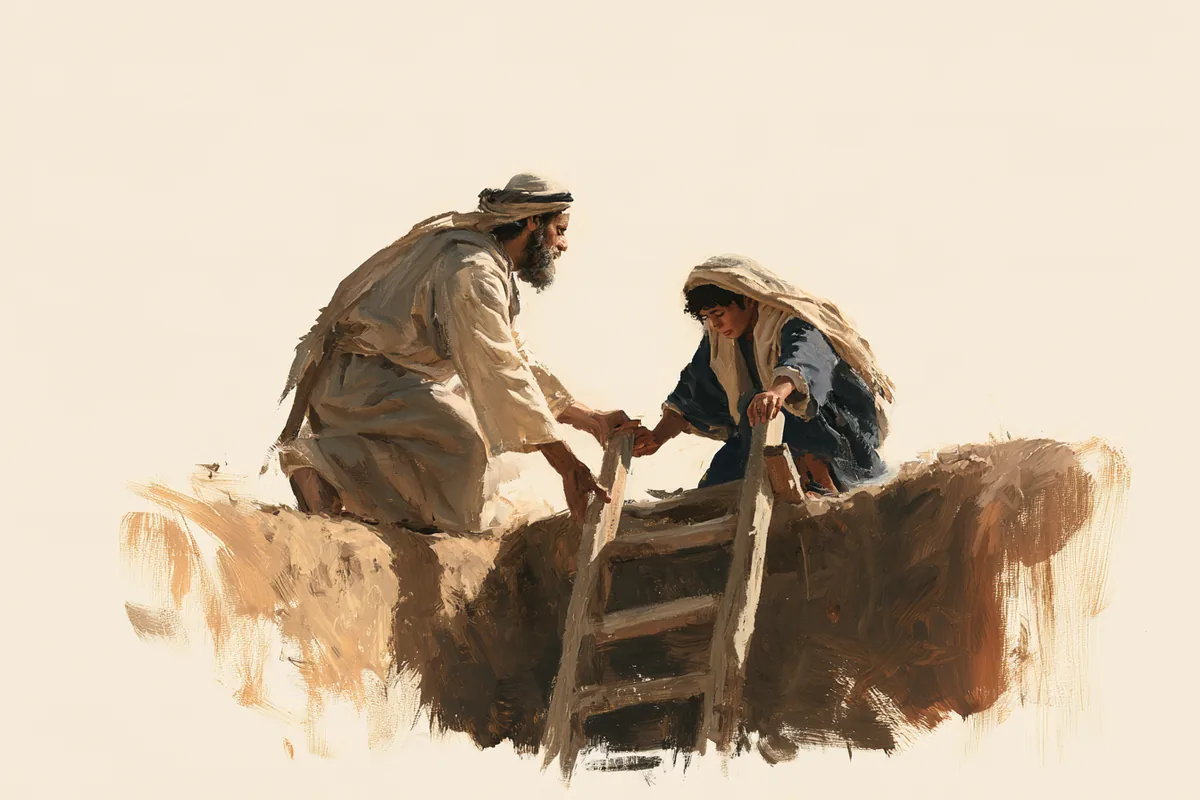
Likutei Halachos applies the ladder to raising fallen souls, baalei teshuva, Jews returning to observance, and converts. All their ascent comes through a ladder. Physically, to lift something from the ground to the roof one uses a ladder, and to lift something out of a pit one lowers a ladder into it. The deeper the pit, the stronger the ladder has to be.
These souls have fallen very far, all the more so now at the end of this bitter exile, when the adversary still incites them with powerful desires, strange ideas, and the weakening of resolve that comes from mockers. So whoever works to repair them has to set up a ladder that is sound and very strong, so that no one falls from it.
That is why “סֻלָּם, ladder,” equals “סִינַי, Sinai,” as cited. All their ascent comes through the Torah given at Sinai. The Torah was given on Sinai, a low mountain, as Chazal said, to show that the tzaddik, the righteous leader, in the aspect of Moshe, brings the Torah down to Israel through lowliness. He lowers himself completely and wades into every kind of mud in order to raise fallen souls from the depths, strengthen them, and revive them with everything that restores the soul, until they stand firm in holiness forever.
Likutei Halachos, Choshen Mishpat, Laws of Damages 5:25:1
Likutei Halachos: Rabbi Nosson of Breslov’s Chassidus on the Shulchan Aruch, built on the teachings of Rebbe Nachman, 19th century.
What the seforim read in 130
- סלם = סיניLikutei Halakhot, Toldot Yaakov Yosef, Arvei Nachal
- טינס = עני with the kollelBen Porat Yosef
- סיני = עניNachal Kedumim on Torah
- עין = 130Arvei Nachal, Be'er Mayim Chaim, Sidduro Shel Shabbat
- סיני = 130Tiferet Shlomo, Sha'ar Ruach HaKodesh, Zeroa Yamin
- סל"ם = 130Ohev Yisrael, Mikdash Melekh, RaMaZ Commentary on Zohar, Yahel Ohr on Zohar
- עני = 130Chayyim VaChesed, Tiferet Shlomo, Sha'ar HaMitzvot
- למ"ס = 130Maor VaShemesh, Sha'ar HaPesukim
In Tanach
- עליך
- עמך
- הכהנים
- פן
- יען
- ויעמד
- ויקחו
- עין
- עני
- למלכי
- סיני
- החזיק
- יעמדו
- ימינך
- מפי
- לימים
- למס
- נודע
- קל
- מלין
- מלכם
- ויוחנן
- חזקיה
- עמודי
- המכסה
- מועדי
- פלך
- ידעום
- כפיך
- נסך
- סבבוני
- וחקיו
- ממלך
- ממים
- באזניכם
- במגפה
- למימי
- בלחץ
- ועדן
- יעמוד
- כעם
- נף
- סמל
- צלי
- בחיקי
- המסכה
- ויחננו
- ועמדי
- יסמך
- לכף
- למני
- מכלם
- עמדיו
- צם
- אלגומים
- בזנוניה
- בחנמל
- בפחם
- גבענה
- ההצל
- המועדה
- הנעה
- הענה
- הפילה
- ודינין
- והאביונים
- והעמדה
- וידעם
- ויחנון
- ויחקו
- ויניחום
- וכחוץ
- ולפיד
- יודעם
- יכלכלך
- ינע
- יפיל
- כבחצי
- כהניהם
- כנני
- כנס
- לחצב
- לכלכל
- למודים
- לנים
- לסלי
- לצוד
- מגאלנו
- מהמהם
- מחבלים
- מיסך
- מכיס
- מסיך
- מסל
- מעודי
- נדעו
- נועד
- סכים
- סלם
- סמכי
- עדנו
- עיים
- פים
- צהלה
First appearance of עליך
וַתֹּ֨אמֶר שָׂרַ֣י אֶל־אַבְרָם֮ חֲמָסִ֣י עָלֶ֒יךָ֒ אָנֹכִ֗י נָתַ֤תִּי שִׁפְחָתִי֙ בְּחֵיקֶ֔ךָ וַתֵּ֙רֶא֙ כִּ֣י הָרָ֔תָה וָאֵקַ֖ל בְּעֵינֶ֑יהָ יִשְׁפֹּ֥ט יְהֹוָ֖ה בֵּינִ֥י וּבֵינֶֽיׄךָ׃